Ikhala Impact

Biochar carbon removal from plantation forestry residues in KwaZulu-Natal, South Africa. Turning post-harvest slash into durable soil carbon, on the ground where it falls.

Project information for carbon buyers
October 2026 · Rev. 1

Discuss offtake

The short version

Aerial view of slash being broadcast-burnt on a harvested plantation compartment

Every harvest leaves a forest floor of slash. Today, most of it goes up in smoke.

KwaZulu-Natal holds around 40% of South Africa’s plantation forestry. After every harvest, the branches, bark and tops left behind have to be cleared before replanting. The cheapest way is to burn them in the open, which sends most of that carbon into the air along with methane, carbon monoxide and smoke.

Our mobile crews turn this slash into biochar in flame-curtain kilns, on the compartment where it fell, and work the biochar back into the same soil.

Every kiln is measured, sampled and logged in CHARR, our digital MRV platform, and the project is seeking certification under Puro.earth and preparing pre-audit. 


~1,000

CORCs forecast from the first campaign, FY27–28 (Mar 2027 – Feb 2028)

< 0.3

H/Corg in historic Ring of Fire biochar results

5 partners

Evergreen Forestry, Tekwani, Mondi, Sappi and NCT

CORC: CO₂ Removal Certificate = 1 tCO₂e removed

The baseline: what happens today

Cheap, destructive, and large emissions pulse with almost all of the carbon released.

After harvest, compartments must be cleared quickly for replanting, so the slash is broadcast-burnt. It runs under fire-management controls, but the combustion itself is uncontrolled. Crews work in the smoke, neighbouring communities are exposed, escaped fire is a recurring dry-season risk and flare-ups occur frequently.

01

Carbon lost

The large majority of the biomass carbon goes to the atmosphere during the burn.

02

Non-CO₂ pollutants

Methane, carbon monoxide, black carbon and PM2.5, in heavy pulses from the smouldering phase.

03

No alternative in practice

Biochar production is not legally required and is not established commercial practice in the target forestry operations.

The project’s financial additionality assessment will demonstrate its dependence on carbon revenue. Without it, this significant emissions pulse will continue

The Mobile Fleet system

Twelve kilns, one compartment, on-site production.

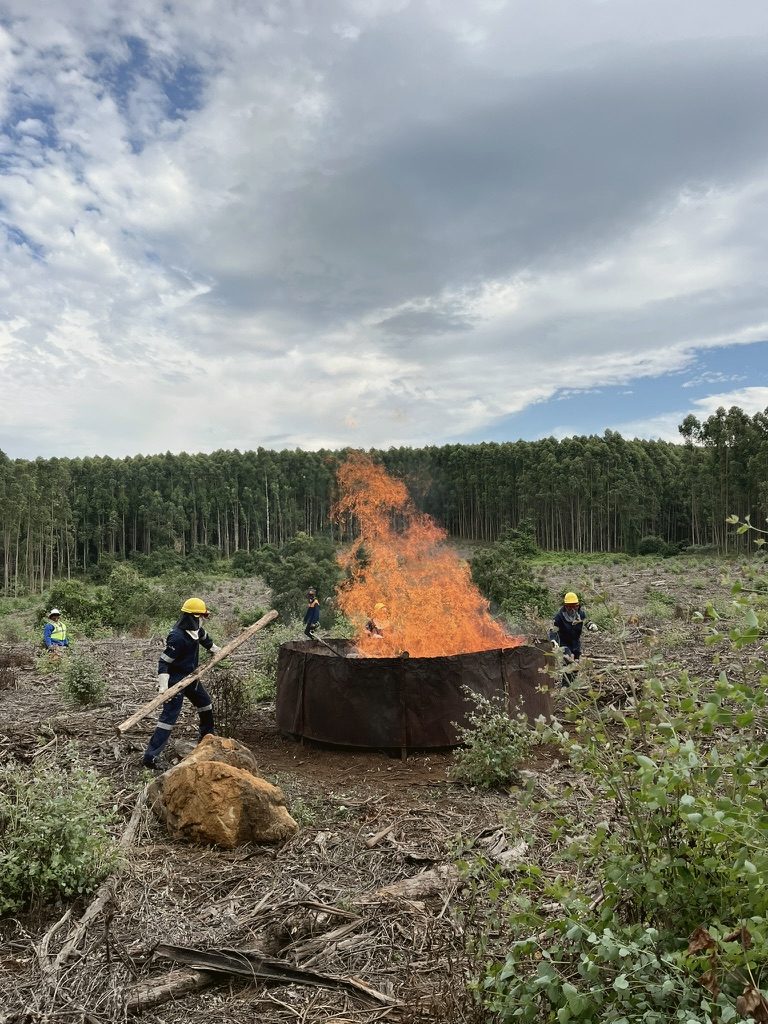
Each production site runs twelve Ring of Fire kilns: 12-panel, forced-air flame-curtain kilns that each produce 11 m³ or more of biochar per burn (net volume, measured after knock-down and removal of bones), one burn per kiln per day. Each kiln is run by a two-person crew. A blower (Honda GX200) feeds air, an LPG torch lights it, and slash is loaded continuously under a flame cap, so the pyrolysis gases burn in the flame instead of escaping as smoke.

Crew loading slash into a row of Ring of Fire kilns

Who runs a site

Blower Boss

Controls air and loading on each kiln.

Water Boss

Owns water and fire safety on each kiln.

Loader operators

Two to three serve the site.

Foreman

Takes every measurement and sample and records it in CHARR.

Supervisor

Across sites: makes the Go/No-Go call and reviews data daily.

Measured every kiln, every burn

  1. 01Level the bed
  2. 02Bulk density: hot-coal probe, verified at lab
  3. 03Knock down with water
  4. 04Depth: 3+ readings, photographed = gross volume
  5. 05Biochar core samples, 3+ per kiln
  6. 06Quench and open
  7. 07Bones removed and measured: gross − bones = net volume

CHARR dMRV

  • Biochar mass per kiln calculated from measured net volume and measured bulk density
  • Daily batch composite sample per site and feedstock for H/Corg, Corg, PAH and heavy metals
  • Application record per batch: compartment ID, GPS polygon, area, mass, date of incorporation, photographs

Published field methodology: Wilson, Bekker et al. (2024) USDA Forest Service RMRS-GTR-439; Wilson, Bekker & Feher (2024) JoVE 203:e65543.

From the field

One burn, start to finish.

Demonstration and operational-scale burns with our forestry partners in KwaZulu-Natal, 2025–26.

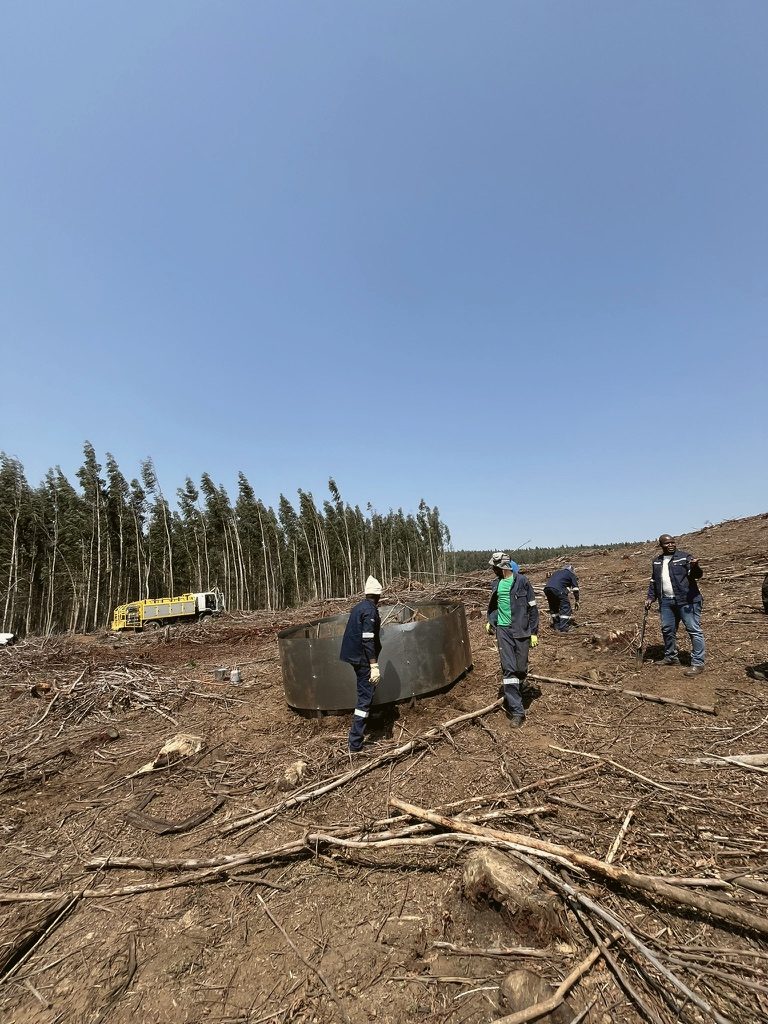
Crew setting up kilns on a harvested compartment
01 · Set up on the compartment
Kiln burning under a flame cap with a Blower Boss alongside
02 · Load under the flame cap
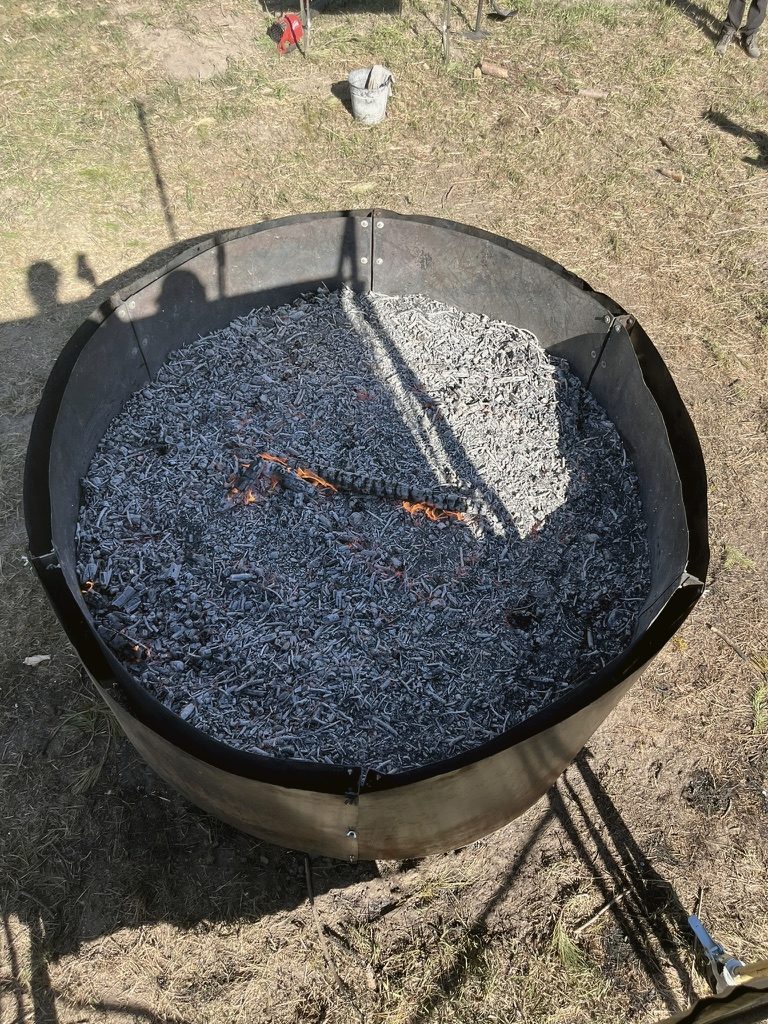
Levelled biochar bed inside a kiln ring, ready to be measured and sampled
03 · Measure and sample
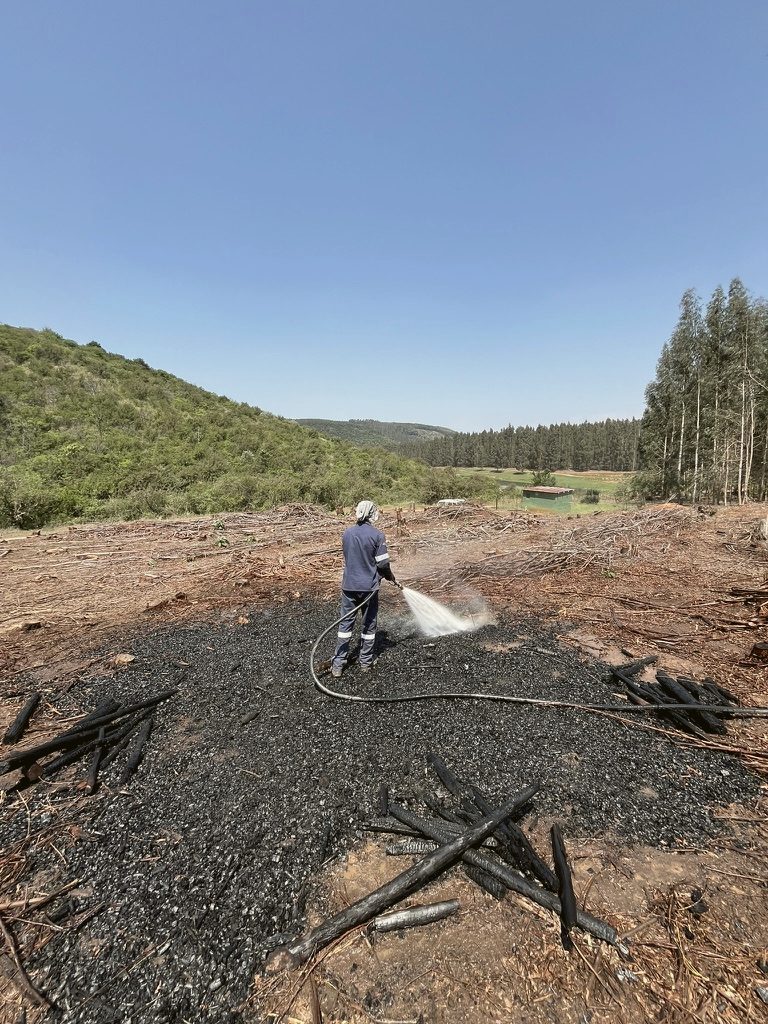
Crew member quenching a char bed with water
04 · Quench
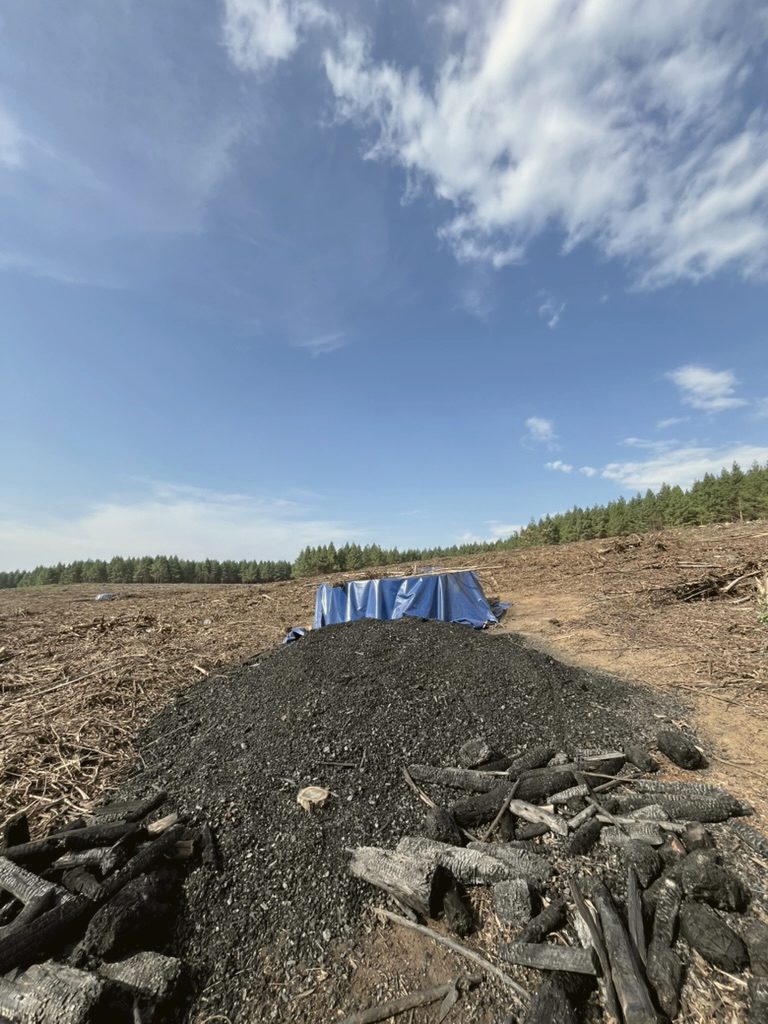
Biochar pile on the compartment, ready for incorporation
05 · Into the same soil

Project at a glance

Project details

Registry
Puro.earth, Biochar Methodology Edition 2025 (mobile facility)
Location
KwaZulu-Natal, South Africa
Feedstock
Pine and eucalyptus harvest residue (slash) from FSC-certified plantations
Technology
Forced-air flame-curtain kiln, 12-kiln mobile site
End use
100% soil incorporation on the production compartment; nothing leaves site
Operator
Ikhala Impact (Pty) Ltd, single operator with trained, supervised crews
Status
Puro pre-assessment submission end October 2026 (planned).. Field trials Nov–Dec 2026; emissions testing end January 2027. Funding for first deployment April 2027 (target). First 1,000-credit campaign May–August 2027, then Facility and Output Audit. First CORC issuance targeted Q4 2027.

Supercritical Biochar Vetting Protocol

Five dimensions. Our position, and the evidence.

Evidenced Available In progress Planned

Still open

Road to first credits

From pre-assessment to first CORCs in Q4 2027.

  1. Oct 2026Puro pre-assessment submission (planned)
  2. Nov – Dec 2026Field trials and test burns; first-batch samples
  3. Jan 2027Puro feedback; emissions testing complete
  4. Apr 2027Funding for first deployment (target)
  5. May – Aug 2027First 1,000-credit campaign, then Facility and Output Audit
  6. Q4 2027First CORC issuance targeted

Offtake and prepayment

Help bring the next generation of carbon removal into the field.

Secure early access to durable, scalable biochar carbon removals from South Africa.

The biomass is available. The forestry relationships are established. The technology has been demonstrated in the field.

Now we’re bringing these elements together in a mobile production system designed to deliver high-integrity carbon removals at a price that makes large-scale procurement possible.

Our first commercial campaign targets approximately 1,000 CORCs in 2027, with a pathway to expand across South Africa’s plantation forestry estate.

We’re engaging forward-thinking carbon buyers interested in early offtake agreements, forward purchases and strategic partnerships. Early commitments can help unlock fleet deployment and accelerate the delivery of independently verified removals.

Be part of the first campaign — and help build what comes next.

Or email directly

jp@ikhala.tech

Sends straight to the Ikhala team. We reply within two working days.